Kenya Safaris Destinations
Arabuko Sokoke National Park
⌖ Kenya Safaris
Most people come to the Kenyan coast for the ocean. But East Africa's largest remaining coastal forest sits just kilometres inland; ancient, extraordinary and over 40 million years in the making. Most visitors drive straight pa...
Wildlife Viewing
Nature Walks
Birding
Cultural Experiences
About Arabuko Sokoke National Park
Most people come to the Kenyan coast for the ocean. But East Africa's largest remaining coastal forest sits just kilometres inland; ancient, extraordinary and over 40 million years in the making. Most visitors drive straight past it. Those who stop, discover one of Kenya's most remarkable natural secrets. Arabuko Sokoke National Park/ Forest Reserve is found North of Mombasa. This fascinating forest wilderness is nestled beside the beaches of Watamu, just minutes from the waters of the Indian Ocean. But enter the forest and discover a world apart from the beaches and reefs.
Covering approximately 400 square kilometres, Arabuko Sokoke is a forest of extraordinary richness. The air hums with butterflies and birdsong, the trees are alive with Sykes and Colobus Monkeys, and the forest floor is home to some of the world's rarest small mammals, among them the Golden-rumped Elephant Shrew and the Sokoke Bushy-tailed Mongoose, both found almost nowhere else on earth. For birders, the park is a genuine pilgrimage destination, with over 230 recorded species including the critically endangered Sokoke Scops Owl, Clarke's Weaver and the Amani Sunbird. The forest stretches all the way to the headwaters of the mighty Sabaki River, and elephant herds still pass through on their ancient routes to the water's edge, a reminder that this place operates on a timescale far beyond human memory.
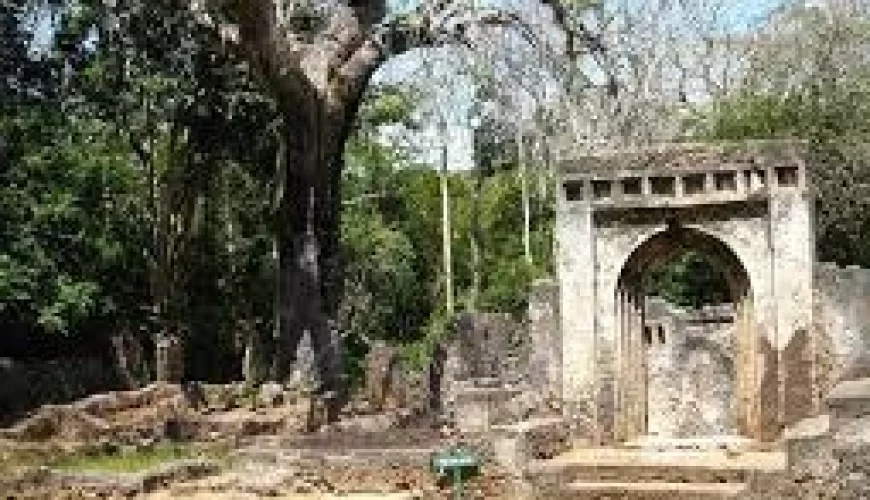
The forest holds a human secret too. Deep within its trees, lie the ruins of Gedi, a prosperous 13th century Swahili town that thrived for centuries, hidden from Portuguese invaders and largely untouched by the outside world. At its peak, Gedi is believed to have housed thousands of residents, complete with a palace, mosques and stone houses. It was mysteriously abandoned, and today its crumbling walls, swallowed by roots and vines, stand as one of the coast's most haunting and atmospheric historical sites. A visit to Arabuko Sokoke is incomplete without walking in Gede Ruins.
Arabuko Sokoke is not just a National Park/ Forest Reserve, it is a globally recognised conservation priority. Designated as an Important Bird and Biodiversity Area (IBA) and forming part of the East African Coastal Forest biodiversity hotspot, it is considered one of the most ecologically irreplaceable forests in Africa. The park is jointly managed by the Kenya Forest Service and Kenya Wildlife Service, with active community conservation programmes involving local villages whose livelihoods are directly tied to the health of the forest.
Best Time To Visit
Arabuko Sokoke National Park can be visited year-round, but the dry seasons offer the most rewarding experience for most visitors. The two dry periods : January to February; and June to October, are the best times to explore, when the forest trails are most walkable, wildlife is easier to spot as animals move more freely through the undergrowth, and birding conditions are at their clearest. The long dry season from June to October is particularly popular, coinciding with Kenya's peak safari season and the presence of numerous migratory bird species that swell the park's already impressive count. For serious birders, this is the prime window, the canopy is less dense, calls travel further through the trees, and the endemic species are at their most active.
The rainy seasons: the long rains from March to May; and the short rains from November to December, transform the forest into something even more lush and atmospheric. The undergrowth thickens, the air fills with the sound of frogs and insects, and butterfly activity reaches its peak, making it a paradise for nature photographers. The trails can become slippery, so sturdy footwear is essential during these months, but visitor numbers are low and the forest feels truly wild and untouched.
Whatever the season, early mornings are by far the best time of day to enter the forest, the birds are most vocal at dawn, the light filtering through the canopy is at its most beautiful, and the chances of encountering the park's shyer residents are at their highest.
Activities
Enjoy guided birding trails; escorted forest walks; butterfly watching; cycling through the ancient coastal woodland; exploring the ruins of the 13th century Swahili town of Gedi; and mangrove walks & tidal flat birding in the neighbouring Mida Creek (minutes away from the park).
Safaris in Arabuko Sokoke National Park
Hotels in Arabuko Sokoke National Park