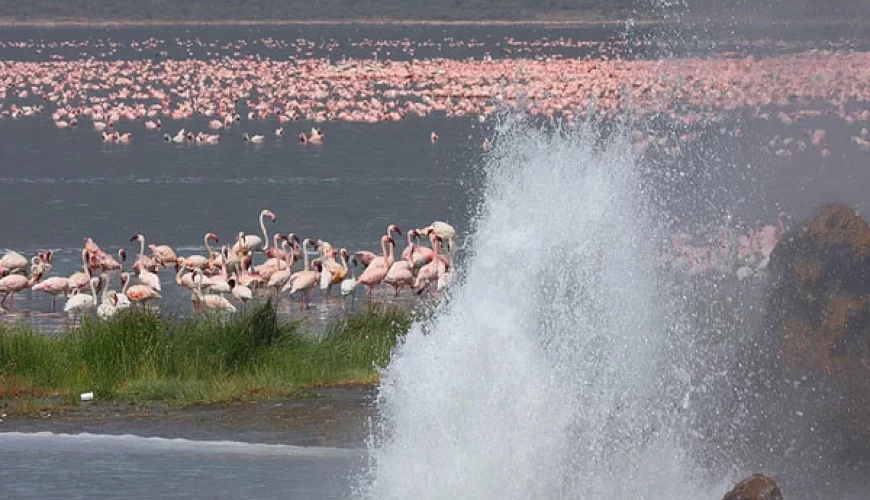
Lake Simbi National Santuary
The Luo people say a village once stood here. That one night, without warning, the earth opened and the water came. No one survived. Lake Simbi is what remained. Located near Kendu Bay in Homa Bay County, Lake Simbi is a tiny c...
The Luo people say a village once stood here. That one night, without warning, the earth opened and the water came. No one survived. Lake Simbi is what remained. Located near Kendu Bay in Homa Bay County, Lake Simbi is a tiny crater lake of volcanic origin measuring roughly one kilometre in radius. It has no known inlet or outlet, and its high alkalinity means the lake supports no fish, yet it teems with birdlife, including Flamingos, Little Grebes, Little Egrets, and Egyptian Geese. The lake and its neighbouring Odango wetland together form one of western Kenya's most rewarding birdwatching sites. The alkaline waters are also believed by local Luo communities to carry healing properties for skin ailments, a tradition that has drawn people to these shores for generations.
Lake Simbi sits within a broader catchment supporting a population of around 250,000 people, while the immediate lake basin is home to approximately 325 individuals farming the surrounding volcanic alluvial, clay, and black cotton soils. The surrounding vegetation is a mix of acacia, balanites, and combretum woodland edged by ancient lakeshore forest; a habitat that, combined with the lake's alkaline waters, creates ideal conditions for the rich birdlife that has made Simbi one of western Kenya's most rewarding birding destinations.
The lake supports a permanent population of both lesser and greater flamingos, a distinction that sets it apart from many of Kenya's other Rift Valley lakes where flamingo numbers fluctuate seasonally. The waterbird community draws birdwatchers from across the region. Lake Simbi lies close to Lake Victoria, Kenya's largest freshwater body, making it a natural addition to any itinerary exploring the rich ecosystems of western Kenya.
The lake's high alkalinity makes it unsuitable for drinking and inhospitable to fish, yet it sustains human life in other ways. Local communities have long harvested salt from the lake's edges, and the alkaline waters are widely regarded as a natural remedy for skin ailments, a tradition passed down through generations. A local church draws water from the lake as a source of blessing, and the water is believed by many to carry supernatural powers rooted in the lake's mythological origins.
Lake Simbi also holds a quiet educational significance. The story of its origins; a village swallowed whole by the earth, is one of the most enduring legends in Luo oral tradition, and the lake serves as a living classroom for local communities, connecting younger generations to the landscape, culture, and natural history of the western Kenya lakelands.
Best Time To Visit
One of the best times to visit Kenya is from July to September, during the country’s dry season, which also coincides with the Great Migration of wildebeest and zebra. The rainy seasons are also good times to travel, as there are fewer visitors and you can admire the striking emerald vegetation.
Activities
Wildlife Safari, Witness the Wildebeest Migration, Relax on the East African Coast, Cultural Travel on the Island of Lamu, Climb Mount Kenya, Hike Through Hell’s Gate, River Raft the Tana River, Hang Out on Lake Victoria, Explore Nairobi, Eat Nyama Choma, Orphaned Elephants, Hippo Point, Mamba Village
No matching hotels for now.