Safari Photography Guide: How to Capture Stunning Wildlife Photos in Africa
Good safari photography begins before the shutter clicks.
It begins with watching the light. Listening to the guide. Noticing where the animal is facing. Waiting for movement instead of taking the first available frame. Understanding when to stay quiet, when to change position, and when the best photograph may not be the closest one.
Africa gives photographers extraordinary subjects: lions in golden grass, elephants crossing dusty tracks, giraffes against wide skies, leopards resting in trees, gorillas in rainforest shade, birds in flight, dramatic sunsets, open plains, campfire evenings, and quiet moments between game drives.
But a safari does not behave like a studio.
Animals move when they choose. Light changes quickly. Dust can soften a scene or ruin a lens change. A leopard may appear for five seconds and disappear into a thicket. A lion pride may sleep for hours before one cub lifts its head into perfect light.
That is what makes safari photography exciting.
At Diwaka Safaris, we always remind photography-focused travelers that the best images come from a combination of the right destination, patient guiding, good vehicle positioning, realistic expectations, and respect for wildlife. Camera gear helps, but field craft matters just as much.
This guide explains how to take better safari photos in Africa, from camera settings and lenses to lighting, composition, ethical wildlife behavior, phone photography, and choosing the right safari route for your photographic goals.

What Makes Safari Photography Different?
Safari photography is different from normal travel photography because the subject is alive, unpredictable, and often moving.
You cannot ask an elephant to turn slightly toward the light. You cannot tell a leopard to stay in the tree. You cannot control when a lion wakes up, when dust rises, or when clouds cover the sun.
That means safari photography depends on patience and anticipation.
A strong safari photographer watches behavior. Is the animal alert? Is it about to walk? Is it looking toward prey? Is the light behind it or in front of it? Is there a cleaner background nearby? Is the guide able to reposition without disturbing the animal?
The best safari images often happen when the photographer waits for behavior, not just presence.
A sleeping lion is a record. A lion stretching, yawning, greeting another lion, or walking through dust becomes a photograph with life.
Diwaka Safaris photography note: do not rush every sighting. Sometimes the best decision is to wait quietly and let the scene develop.
Safari Photography Settings at a Glance
Camera settings depend on your equipment, light, and subject, but this table gives a useful starting point.
|
Situation |
Suggested Approach |
Field Tip |
|
Still wildlife |
Moderate shutter speed, single-point or animal-eye autofocus if available |
Focus on the eye and wait for expression |
|
Moving animals |
Faster shutter speed and continuous autofocus |
Track movement early before the action peaks |
|
Birds in flight |
Very fast shutter speed and burst mode |
Start with larger birds before trying small fast birds |
|
Low light at sunrise or sunset |
Higher ISO, stable support, wider aperture |
Accept some noise rather than missing the moment |
|
Landscapes |
Wider lens, smaller aperture, careful horizon |
Include foreground interest such as vehicle tracks, grass, or trees |
|
Gorillas or forest wildlife |
Higher ISO, quiet shooting mode, no flash |
Rainforest light is often low and uneven |
|
Dusty scenes |
Backlight or side light can make dust glow |
Protect gear before changing lenses |
|
Silhouettes |
Expose for the sky, simplify the shape |
Works well with giraffes, elephants, trees, and vehicles |
These are not fixed rules. They are starting points. Safari conditions change quickly, and the best photographers learn to adjust without overthinking every frame.
Best Camera Gear for Safari Photography
You do not need the most expensive camera to take meaningful safari photos, but the right gear helps.
For most travelers, a camera with a good zoom lens is more useful than carrying too many lenses. Wildlife can be close one moment and far away the next. Changing lenses in a dusty vehicle can be risky, so flexibility matters.
A practical safari photography setup may include:
- A DSLR or mirrorless camera
- A telephoto lens for wildlife
- A wider lens for landscapes, camps, people, and scenery
- Extra batteries
- Extra memory cards
- Lens cloths and dust protection
- A bean bag or soft support for the vehicle
- Binoculars
- A phone for quick wide-angle moments
A long lens helps with wildlife, but it should not make you forget the wider scene. Some of the strongest safari images show the animal inside its environment: an elephant beneath Kilimanjaro, giraffes under a wide sky, a vehicle crossing an open plain, or a storm building behind a herd.
Diwaka Safaris photography note: bring enough reach for wildlife, but do not photograph every animal as a tight portrait. Environmental images often tell the better safari story.
Do You Need a Big Lens for Safari?
A big lens helps, especially for birds, leopards, shy animals, and distant wildlife.
But it is not the only way to create strong safari images.
Many travelers become too focused on zooming in. They forget about light, shape, background, atmosphere, and storytelling. A close-up of a lion can be beautiful, but a wider frame showing the lion in golden grass, with dust or clouds behind it, may feel more powerful.
A good safari gallery should include variety:
- Close animal portraits
- Wider environmental scenes
- Action shots
- Landscape images
- Camp atmosphere
- Guide and vehicle moments
- Details such as tracks, horns, feathers, or dust
- Quiet moments between sightings
The goal is not only to prove what you saw. The goal is to show how the safari felt.
How to Use Light on Safari
Light is one of the most important parts of safari photography.
The best light is usually early in the morning and late in the afternoon. This is when the sun is lower, shadows are softer, colors are warmer, and animals are often more active.
Midday light can be harsh. Animals may rest in shade, colors can look flat, and strong overhead light may create difficult shadows. That does not mean you should stop shooting, but it does mean you may need to think differently.
In harsh light, look for:
- Black-and-white possibilities
- Animal behavior rather than perfect light
- Backlit dust
- Reflections near water
- Details such as patterns, horns, eyes, or textures
- Wider landscape images with clouds or strong shapes
Morning and evening are especially strong in places such as Masai Mara Game Reserve, Serengeti National Park, Amboseli National Park, and Tarangire National Park, where open landscapes allow beautiful light to shape the scene.
Diwaka Safaris photography note: when possible, ask for early departures. The first hour of light can produce images that are difficult to recreate later in the day.

Vehicle Positioning Matters More Than People Realize
On safari, the vehicle is part of the photography setup.
A good guide understands how to position the vehicle for light, background, safety, and animal comfort. A small adjustment can change everything: a cleaner background, better eye contact, softer light, or a stronger angle.
For photographers, vehicle positioning can matter more than camera gear.
A good position should:
- Respect the animal’s space
- Avoid blocking the animal’s path
- Keep the light in mind
- Reduce distracting backgrounds
- Allow a stable shooting angle
- Avoid crowding other vehicles
- Give the animal room to behave naturally
The best guides do not chase wildlife for a photograph. They anticipate where the scene may unfold and position carefully.
Diwaka Safaris photography note: never ask a guide to push too close or disturb an animal for a shot. A respectful distance often produces more natural and powerful images.
How to Photograph Lions, Leopards, and Other Big Cats
Big cats are among the most exciting safari subjects, but they also require patience.
Lions may sleep for long periods, especially during the heat of the day. Leopards may hide in trees, thickets, or river lines. Cheetahs may be active one moment and still the next.
For better big-cat photos:
- Start early when predators are more active
- Watch for yawning, stretching, grooming, and interaction
- Focus on the eyes
- Include the environment when the background is strong
- Wait for movement rather than only photographing sleep
- Use faster shutter speeds when cats begin walking or hunting
- Keep quiet at sensitive sightings
- Avoid over-cropping every image
Strong big-cat destinations include Masai Mara, Serengeti, Samburu National Reserve, Ruaha National Park, South Africa private reserves, and selected areas in Uganda and Zambia.
Diwaka Safaris photography note: a sleeping cat can become active suddenly. Keep your camera ready, even when the scene seems quiet.
How to Photograph Elephants
Elephants are excellent subjects because they offer emotion, scale, movement, and family behavior.
The strongest elephant photos often show relationships: a calf protected between adults, trunks touching, ears spread, dust bathing, drinking, or a herd moving in line across open ground.
For better elephant photos:
- Watch family behavior
- Look for calves and interaction
- Use wide shots to show scale
- Photograph dust when light is behind or beside it
- Avoid cutting off trunks or feet awkwardly
- Include landscape when it adds context
- Keep a respectful distance
Amboseli National Park is one of Africa’s most iconic elephant photography destinations because of Mount Kilimanjaro views when the weather is clear. Tarangire National Park offers elephants with baobab landscapes, while Tsavo East and Tsavo West offer a wilder red-earth elephant atmosphere.
Diwaka Safaris photography note: with elephants, do not focus only on size. Their behavior, patience, and family structure often create the most memorable images.

How to Photograph Birds on Safari
Bird photography can be one of the most rewarding parts of safari, especially for travelers who learn to slow down.
Birds add color, movement, and detail to a safari gallery. They also keep photography interesting between large mammal sightings.
For better bird photos:
- Use a fast shutter speed for flight
- Focus on the eye
- Wait for clean backgrounds
- Photograph larger birds first
- Watch for takeoff behavior
- Use continuous autofocus for movement
- Be patient near water, trees, and flowering plants
Good birding and photography areas include Lake Nakuru, Lake Baringo, Lake Naivasha, Queen Elizabeth National Park, Murchison Falls National Park, Nyungwe National Park, and wetland or river-based safari areas.
Diwaka Safaris photography note: birds are excellent for practicing focus, exposure, and patience before bigger wildlife action happens.
How to Photograph Gorillas and Forest Wildlife
Gorilla photography is very different from savannah photography.
The light is lower. The forest is darker. Subjects may be partly hidden by leaves. Movement can be slow or sudden. Flash should not be used. The experience is also emotional, and photographers should not spend the entire encounter looking only through the camera.
For gorilla and forest photography:
- Use quiet shooting mode where possible
- Raise ISO when needed
- Use a wider aperture in low light
- Focus on the eyes
- Watch for hands, faces, and interaction
- Avoid flash
- Protect gear from rain and humidity
- Take a few wide frames to show the forest
- Put the camera down for part of the encounter
In Uganda, Bwindi Impenetrable Forest and Mgahinga National Park are important gorilla trekking destinations. In Rwanda, Volcanoes National Park is the main gorilla trekking area. Kibale National Park and Nyungwe National Park are also valuable for primate and forest photography.
Diwaka Safaris photography note: with gorillas, the best image is not worth missing the feeling of the moment. Take photographs, but leave time to simply observe.

Composition Tips for Better Safari Photos
Strong safari photos are not only about rare animals. They are about composition.
Before pressing the shutter, ask:
- Is the background clean?
- Is the animal facing the light?
- Is there space in the direction the animal is moving?
- Would a wider frame tell a better story?
- Is there a distracting branch, vehicle, or shadow?
- Can I include dust, sky, trees, water, or landscape?
- Is the animal doing something interesting?
Useful composition ideas include:
- Leave space in front of walking animals
- Use trees, grass, or tracks as natural frames
- Include the horizon carefully
- Shoot low where possible from the vehicle
- Look for reflections near water
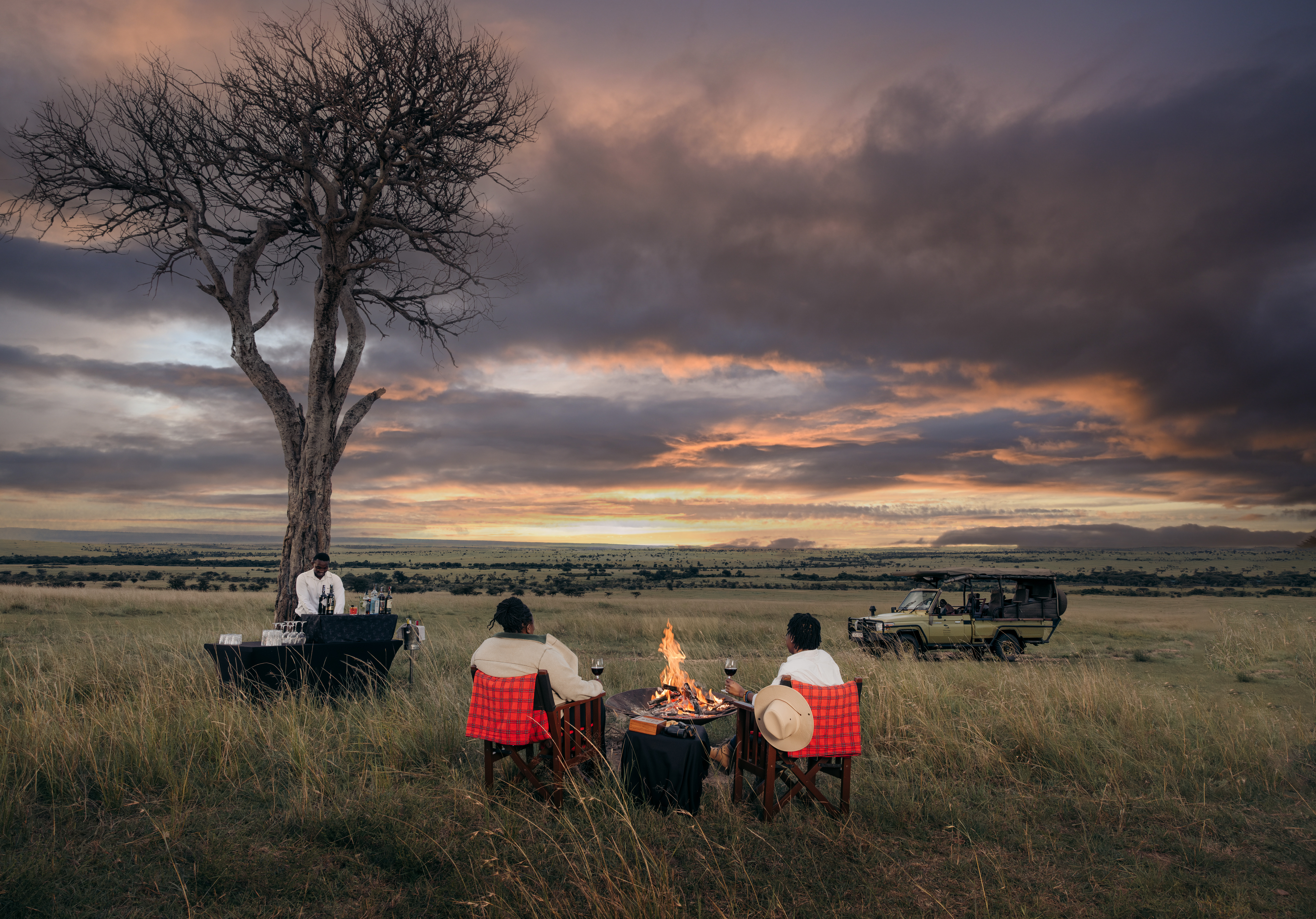
- Use silhouettes at sunrise or sunset
- Include scale by showing the landscape
- Capture behavior, not only portraits
Diwaka Safaris photography note: the best photo is not always the closest photo. Sometimes a wider frame with atmosphere says more.
How to Photograph Movement and Action
Action can happen quickly on safari.
A lion cub may jump, an elephant may flap its ears, a bird may take flight, a cheetah may begin moving, or antelope may suddenly run.
To prepare for action:
- Keep your camera ready
- Use continuous autofocus
- Use burst mode when behavior starts
- Choose a faster shutter speed
- Track the subject before peak action
- Leave space in the frame for movement
- Do not review photos too quickly and miss what happens next
Anticipation matters more than reaction. Watch body language. Animals often show signs before movement: ears lift, heads turn, muscles tense, birds crouch before takeoff, and predators become alert before standing.
Diwaka Safaris photography note: action often begins with a small change in behavior. Learn to watch before you shoot.
Phone Photography on Safari
You can take beautiful safari photos with a phone, especially for wide scenes, lodge moments, sunsets, people, food, landscapes, and short videos.
Phones are less powerful for distant wildlife, but they are excellent for storytelling.
Phone safari tips:
- Clean the lens often
- Avoid over-zooming
- Use the phone for wide scenes
- Capture short video clips
- Photograph camp details and landscapes
- Use portrait mode carefully
- Keep the horizon straight
- Tap to focus and adjust exposure
- Shoot during good light
- Use binoculars for viewing, not as a phone lens substitute unless you know how to do it safely
A phone can be especially useful when a big camera is packed away or when the scene is more about atmosphere than distance.
Diwaka Safaris photography note: do not judge your safari only by close-up wildlife photos. Phone images often capture the human memory of the trip better than a long lens.
Best Safari Destinations by Photography Style
|
Photography Style |
Strong Destinations |
Why They Work |
|
Big cats |
Masai Mara, Serengeti, Samburu, Ruaha, South Africa private reserves |
Strong predator country, open landscapes, and experienced guiding |
|
Elephants |
Amboseli, Tarangire, Tsavo, Murchison Falls, Queen Elizabeth |
Herd behavior, dust, water, baobabs, mountain views, and family scenes |
|
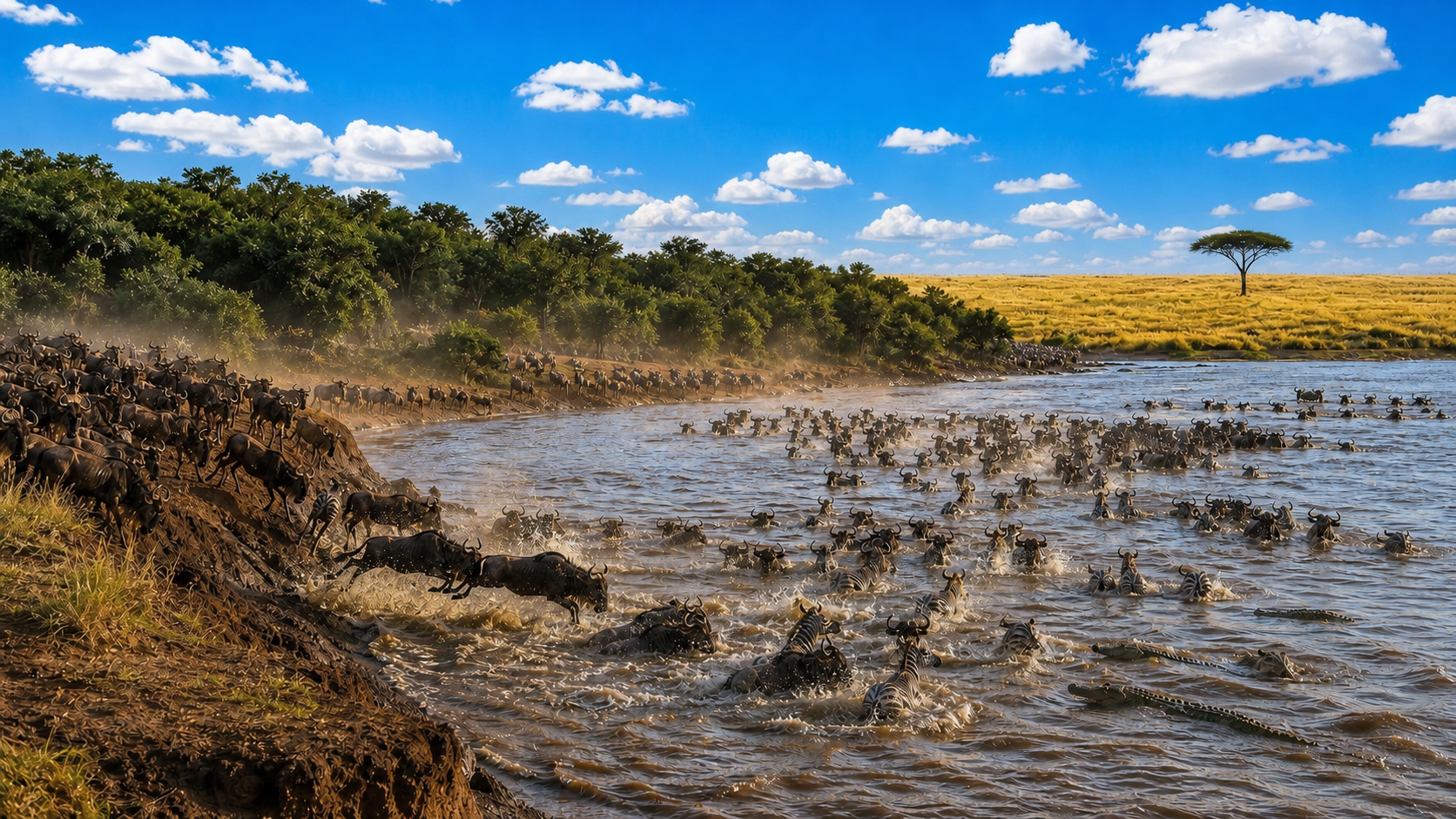
Migration and herd movement |
Serengeti and Masai Mara |
Large-scale wildlife movement and dramatic open landscapes |
|
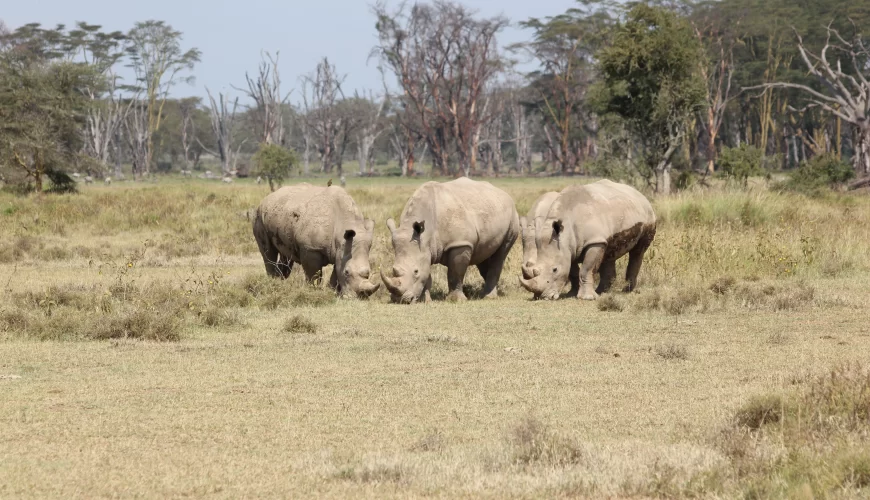
Rhinos |
Lake Nakuru, Nairobi National Park, Ngorongoro Crater, Akagera |
Better route options for protected rhino viewing |
|
Birds |
Lake Nakuru, Lake Baringo, Lake Naivasha, Queen Elizabeth, Nyungwe |
Water, forest, and wetland habitats with strong birdlife |
|
Gorillas and primates |
Bwindi, Mgahinga, Volcanoes, Kibale, Nyungwe |
Rainforest encounters and intimate wildlife storytelling |
|
Landscapes |
Amboseli, Ngorongoro, Lake Natron, Namibia-style deserts, Lower Zambezi |
Strong scenery, light, scale, and atmosphere |
|
River and water safari |
Nyerere, Lower Zambezi, Murchison Falls, Queen Elizabeth |
Reflections, birds, hippos, crocodiles, riverbanks, and boat perspectives |
|
Safari and beach storytelling |
Kenya coast, Tanzania/Zanzibar-style extensions, Maldives, UAE, Thailand |
Strong contrast between wildlife adventure and coastal relaxation |
Should Photographers Choose a Private Vehicle?
For serious safari photography, a private vehicle is one of the best investments.
A private vehicle gives more control over timing, positioning, patience, and pace. You do not have to leave a sighting because other travelers are ready to move. You can wait for better light, adjust angles, or spend more time with a subject.
This is especially useful for:
- Big cats
- Birds
- Elephants
- Migration scenes
- Family groups with photography interests
- Honeymooners who want privacy
- Travelers carrying serious camera gear
A shared vehicle can still work well, especially for casual photographers, but a private vehicle usually creates a better photography experience.
Diwaka Safaris photography note: if photography is a priority, tell your safari planner early. The vehicle setup, guide choice, lodge location, and daily pacing should all support that goal.
Ethical Safari Photography
A good photograph should never come at the expense of wildlife.
Ethical safari photography means respecting animals, guides, other travelers, and the landscape.
Avoid:
- Asking guides to get too close
- Blocking an animal’s path
- Making noise to force eye contact
- Using flash on sensitive wildlife
- Pressuring animals with vehicles
- Crowding sightings
- Leaving the vehicle where it is unsafe or not allowed
- Sharing irresponsible wildlife behavior online
The best safari photographs show natural behavior. They come from patience, respect, and good guiding.
Diwaka Safaris photography note: if an animal changes behavior because of your vehicle, you are probably too close.
Common Safari Photography Mistakes to Avoid
Only Taking Close-Ups
Close-ups are useful, but they can make every image look similar. Include wide scenes, landscapes, tracks, skies, vehicles, and camp moments to tell the full story.
Ignoring the Background
A messy background can weaken a strong animal sighting. Watch for branches, vehicles, harsh shadows, and bright distractions.
Changing Lenses in Dust
Dust is part of safari. Avoid unnecessary lens changes in open vehicles, especially on dry tracks or windy days.
Arriving Late for Morning Game Drives
The best light and animal activity often happen early. Sleeping in may mean missing the strongest photography window.
Reviewing Photos Too Often
It is easy to miss behavior while checking the back of the camera. Take quick checks, but keep watching the scene.
Chasing Sightings Instead of Waiting
Rushing from one animal to another can lead to ordinary images. Waiting often creates better behavior, light, and storytelling moments.
Forgetting to Experience the Safari
Photography is important, but the safari itself matters more. Put the camera down sometimes.
Frequently Asked Questions About Safari Photography in Africa
What camera is best for safari photography?
A mirrorless or DSLR camera with a good zoom lens is ideal for safari photography. A telephoto lens helps with wildlife, while a wider lens is useful for landscapes, camps, and storytelling images. Beginners can still take excellent photos with bridge cameras or good phones if they use light and composition well.
What lens do I need for safari photography?
A telephoto zoom is useful for wildlife, while a wide-angle or standard zoom is helpful for landscapes and camp scenes. Many travelers prefer a flexible zoom range because changing lenses in dusty safari conditions can be difficult.
What are the best camera settings for safari wildlife?
Use a fast enough shutter speed for the subject, continuous autofocus for movement, and a wider aperture when light is low. For still animals, focus carefully on the eye. For action, use burst mode and track the animal before the movement peaks.
Can I take good safari photos with a phone?
Yes, especially for landscapes, sunsets, camps, people, food, and short videos. Phones are less effective for distant wildlife, but they are excellent for storytelling. Avoid heavy digital zoom and focus on wider scenes.
What is the best time of day for safari photography?
Early morning and late afternoon usually offer the best light. Wildlife is also often more active during cooler hours. Midday can be harsh, but it can still work for behavior, details, black-and-white images, and shaded scenes.
Is a private safari vehicle worth it for photography?
Yes, if photography is a priority. A private vehicle gives more control over timing, positioning, and patience at sightings. It is especially useful for big cats, birds, elephants, and serious photographers.
Where is the best place for safari photography in Africa?
It depends on what you want to photograph. Masai Mara and Serengeti are excellent for big cats and open plains. Amboseli is famous for elephants and Kilimanjaro views. Bwindi and Volcanoes are strong for gorillas. Lake Nakuru, Lake Baringo, and Queen Elizabeth are good for birds. Lower Zambezi and Nyerere are strong for water-based safari scenes.
How do I protect my camera gear on safari?
Use dust protection, keep gear covered when driving, avoid changing lenses in dusty conditions, carry lens cloths, bring extra batteries and memory cards, and use a padded camera bag. For fly-in safaris, check luggage limits before travel.
Can I photograph gorillas with flash?
No. Flash should not be used for gorilla photography. Rainforest photography requires quiet behavior, patience, higher ISO when needed, and respect for guide instructions.
How can Diwaka Safaris help plan a photography safari?
Diwaka Safaris can help choose destinations, lodges, guides, vehicles, and pacing based on what you want to photograph. Whether your focus is big cats, elephants, birds, gorillas, landscapes, or migration scenes, the route can be designed around better light, stronger habitats, and enough time in the field.
Final Thoughts
Safari photography is not only about equipment.
It is about patience, light, timing, guiding, respect, and the ability to notice what is happening before the obvious moment arrives.
A great safari photo may be a lion in golden grass, but it may also be a quiet elephant family, a bird taking flight, a guide reading tracks, a storm over the plains, a gorilla’s hand in the forest, or dust glowing behind a moving herd.
The best images come when travelers slow down enough to see properly.
Planning a photography safari? Tell Diwaka Safaris what you want to photograph — big cats, elephants, birds, gorillas, landscapes, migration scenes, or safari-and-beach storytelling. The team can recommend the right destinations, vehicle style, guide setup, and pacing to help you return with images that feel as memorable as the journey itself.